

Triple offset butterfly valves (TOBVs) are designed for high-performance sealing in demanding applications—but achieving consistent, leak-free shut-off remains a challenge in real-world conditions.
Even minor surface imperfections or inconsistencies in seat seal manufacturing can create leakage paths, reduce sealing reliability, and increase actuator demands.
To address these challenges, EGC Enterprises developed a proprietary manufacturing process for triple offset seat seals that improves surface integrity, ensures uniform loading, and enhances bi-directional shut-off performance across a wide range of operating conditions.
The Challenge
Triple offset butterfly valves rely on a precisely machined sealing interface where the seat seal must compress evenly against the valve seat under torque from the offset shaft.
In practice, manufacturers face several challenges:
- Multi-layer laminated construction (metal and flexible graphite) makes machining complex
- Surface burrs and imperfections can disrupt sealing contact
- Uneven loading across the seal circumference can lead to leakage paths
- High-pressure and high-temperature conditions increase sealing demands
- Maintaining consistent bi-directional shut-off performance is difficult over long service cycles
These factors can reduce sealing reliability and make it difficult to achieve true “leak-free” performance in demanding industrial applications.
The Solution
EGC developed a specialized manufacturing process for TOBV seat seal discs designed to improve surface integrity and sealing consistency. The approach focuses on minimizing surface imperfections and improving uniformity across the seal structure to support more reliable sealing performance.
“Flexure, resilience, and surface finish are each critical to leak-free service as TOBV seals are compressed radially against the valve seat by torque applied to the valve’s offset shaft,” says EGC Vice President.
The solution incorporates several design and manufacturing considerations intended to support sealing performance:
- Removal of burrs and surface imperfections on seal faces
- Improved machining consistency for laminated metal and graphite structures
- More uniform elasticity across the seal circumference
- Even loading during compression against the valve seat
- Reduced actuator effort through improved sealing efficiency
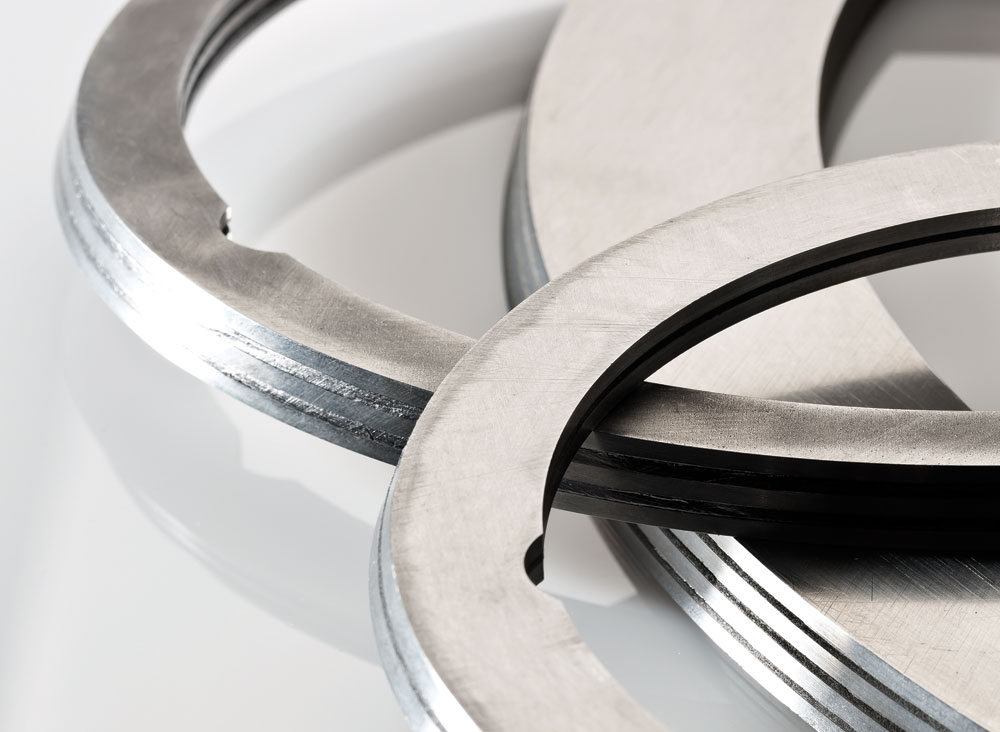
TOBV seat seals are constructed using alternating layers of rigid metals and flexible graphite materials. This combination is intended to provide structural strength while maintaining the flexibility needed for sealing performance in demanding operating environments.
Results and Benefits
The improved TOBV seat seal design delivers enhanced sealing performance and operational reliability in demanding applications:
- Supports positive bi-directional shut-off performance
- Enables consistent sealing over extended cycle life (10,000+ cycles in OEM testing)
- Improves seal load distribution for more reliable shut-off
- Reduces torque requirements for valve actuation
- Performs in extreme conditions, including cryogenic to high-temperature service
- Suitable for high-pressure applications up to 900 lb class service
These improvements help support more reliable valve performance, reduced leakage risk, and improved operational consistency in critical industrial systems.
Need Help With a Similar Challenge?
Dealing with leakage, high torque, or inconsistent performance in triple offset butterfly valves?
Our team can help evaluate your application and recommend sealing solutions designed to improve shut-off reliability and long-term performance.