

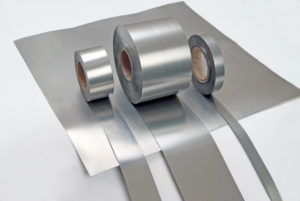
Flexible graphite is one of the few industrial sealing materials capable of performing across an exceptionally broad temperature range. Under specialized conditions, homogeneous flexible graphite can operate from approximately -400°F (-240°C) to 5,400°F (3,000°C).
Yet temperature capability alone does not determine sealing performance. Actual operating limits depend on factors such as atmosphere, pressure, process media, product construction, seal configuration and other application-specific conditions.
EGC manufactures flexible graphite sealing products from a large variety of flexible graphite materials including our own Thermafoil® Graphite Sheets & Rolls and Thermafoil® Laminated Graphite Sheets & Rolls, for demanding industrial applications. Understanding how these factors interact is essential when selecting the right graphite solution.
What Is the Temperature Range of Flexible Graphite?
Homogeneous flexible graphite can be used under specialized conditions at temperatures as low as approximately -400°F (-240°C) and as high as approximately 5,400°F (3,000°C).
These figures describe the capability of the graphite material under specific conditions—not a universal temperature rating for finished gaskets, packing or other sealing products.
Homogeneous flexible graphite refers to flexible graphite without metallic reinforcement or other reinforcing layers. When graphite is incorporated into a laminated or reinforced construction, other materials may become the limiting factor.
For example, certain stainless-steel-reinforced laminate constructions may be limited to approximately 1,600°F (870°C) because the reinforcement material becomes the limiting factor rather than the graphite itself.
Temperature Capability vs. Service Temperature
The key distinction: A material’s maximum temperature capability is not necessarily the same as the service temperature of a finished sealing product.
| Condition/Temperature | General consideration |
| Very low temperature | Flexible graphite can perform at temperatures approaching -400°F (-240°C) under appropriate conditions |
| High-temperature service | Flexible graphite provides a broad range of elevated-temperature capability |
| Oxidizing environments | Oxidation becomes increasingly important as temperature rises |
| Approximately 850–975°F | Typical oxidation thresholds for uninhibited and inhibited flexible graphite materials under defined test conditions |
| Wetted / Steam Service | Flexible graphite can be used at temperatures up to approximately 1,200°F (649°C) under appropriate service conditions |
| Up to approximately 1,500°F | Thin-edge gasket and packing performance has been demonstrated under specific air-service conditions. |
| Up to approximately 5,400°F | Specialized homogeneous flexible graphite capability in neutral, reducing or vacuum environments |
Understanding Graphite Oxidation
Oxidation thresholds for flexible graphite are commonly identified at approximately:
- 850°F (454°C) for Uninhibited grades
- 975°F (524°C) for Inhibited grades
These values are based on defined hot-air test conditions and are not maximum service temperatures. Actual oxidation behavior depends on factors such as oxygen concentration, exposed surface area, gas velocity, exposure time and seal configuration. This distinction is particularly important in sealing applications because only a relatively small portion of a gasket or packing component may be exposed to the surrounding atmosphere.
For wetted and steam service, flexible graphite can be used at temperatures up to approximately 1,200°F (649°C) under appropriate service conditions, making it suitable for demanding steam and process applications. Thin-edge graphite gasket and packing configurations have demonstrated performance in air at process-fluid temperatures approaching 1,500°F (815°C) under certain service conditions.
In short, an oxidation threshold is not the same thing as a maximum service temperature.

Flexible Graphite for Low-Temperature Applications
Graphite is often associated with high-temperature sealing, but flexible graphite can also perform effectively in extremely low-temperature applications.
Flexible graphite can remain functional at temperatures approaching -400°F (-240°C) under appropriate operating conditions.
Potential applications include:
- LNG processing and storage
- Industrial gas systems
- Cryogenic valves
- Pumps and compressors
- Heat exchangers
- Low-temperature piping
Flexible graphite’s conformability, resilience and chemical resistance make it useful in applications involving low temperatures and temperature cycling. For these applications, engineers should consider the complete sealing assembly—including flange design, compression, thermal contraction, pressure and cycling—not simply the minimum material temperature.
EGC’s Thermafoil® Graphite Sheets & Rolls can be fabricated into gaskets and other sealing components for demanding industrial applications.
Flexible Graphite for High-Temperature Applications
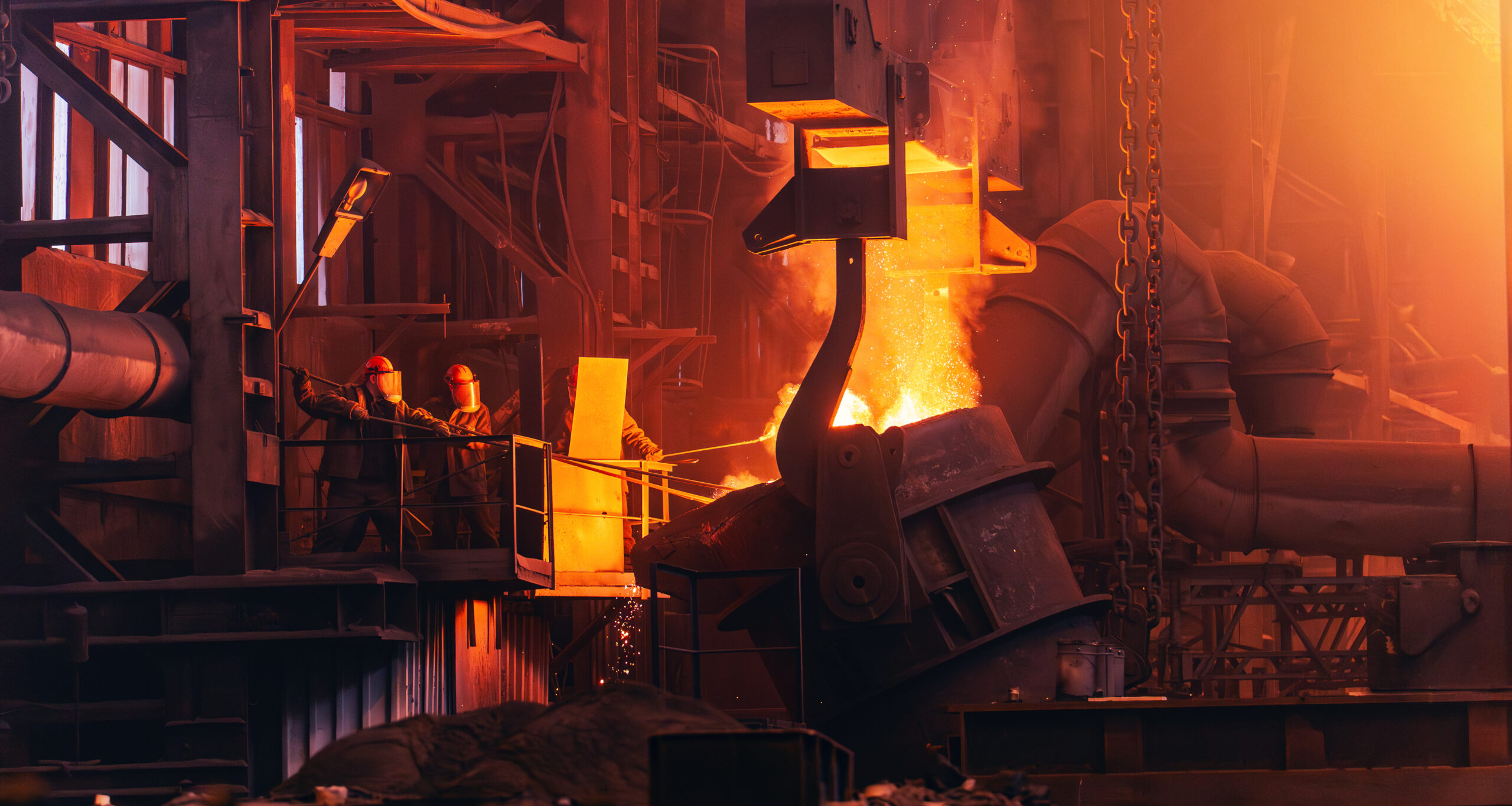
High-temperature sealing is one of the most established uses of flexible graphite.
Its thermal stability and conformability make it suitable for applications involving elevated temperatures, including energy generation, chemical processing and industrial equipment.
For high-temperature service, engineers should evaluate:
- Maximum process temperature
- Operating atmosphere
- Oxygen exposure
- Pressure
- Process media
- Seal geometry
- Thermal cycling
- Material construction
The better question is not simply “What temperature can graphite withstand?”
It is: “What temperature can this graphite sealing construction withstand under my specific operating conditions?”
Why Atmosphere Matters at High Temperatures
Temperature and atmosphere must be evaluated together when selecting graphite for high-temperature service.
In environments where oxygen is absent or limited, graphite can withstand extremely high temperatures. In air or other oxidizing environments, however, graphite can react with oxygen at elevated temperatures.
The rate of oxidation depends on factors such as:
- Temperature
- Oxygen concentration
- Exposure time
- Exposed surface area
- Gas velocity
- Graphite formulation
- Seal configuration
This means a graphite material capable of withstanding thousands of degrees Fahrenheit in a vacuum or reducing atmosphere may have a very different practical service range when exposed to air.
Why Material Construction Matters
Not all graphite sealing materials are constructed the same way.
Homogeneous flexible graphite provides the temperature characteristics of the graphite itself. In many industrial applications, however, additional reinforcement is needed for mechanical strength, handling, blowout resistance or dimensional stability.
Common constructions include:
- Flexible graphite sheets
- Laminated graphite materials
- Reinforced graphite constructions
- Composite sealing materials
Additional materials can introduce their own temperature limitations. For example, a polymer-reinforced graphite laminate may have a lower maximum temperature capability than homogeneous flexible graphite because the polymer reinforcement becomes the limiting component.
EGC’s Thermafoil® Graphite Sheets & Rolls provide flexible graphite material for fabrication into gaskets, packing components and other sealing products. When additional reinforcement or mechanical support is required, Thermafoil® Laminated Graphite Sheets & Rolls provide an engineered alternative that combines flexible graphite with a reinforcing construction. The temperature capability of the finished sealing material should always be evaluated based on its complete construction, not the graphite component alone.
What Should Engineers Consider When Selecting Graphite?
Temperature is only one part of graphite sealing material selection. Engineers should evaluate the complete operating environment, including:
- Temperature: Maximum, minimum and transient temperatures
- Atmosphere: Air, oxygen, steam, vacuum, reducing gases or other environments
- Pressure: Operating pressure and required sealing load
- Process media: Chemical compatibility at operating conditions
- Construction: Homogeneous, laminated or reinforced materials
- Seal configuration: Gasket geometry, packing configuration and exposed surface area
- Thermal cycling: Frequency and severity of heating and cooling
- Dynamic Service: Speed and length of movement
- Scrubbing: Vibrations or movement between mating surfaces
- Abrasive Conditions: Flow velocity, particulate size, and related media factors
The right graphite solution balances temperature capability, chemical resistance, mechanical performance and sealability for the specific application.
Frequently Asked Questions
What temperature range can flexible graphite withstand?
Homogeneous flexible graphite can be used under specialized conditions from approximately -400°F to 5,400°F (-240°C to 3,000°C). Actual operating limits depend on the atmosphere, product construction and application conditions.
At what temperature does graphite oxidation become a concern?
Oxidation thresholds are commonly identified at approximately 850°F for uninhibited flexible graphite and 975°F for inhibited flexible graphite under defined hot-air test conditions. These values are not universal maximum service temperatures because oxidation behavior depends on the operating environment.
Does atmosphere affect graphite temperature performance?
Yes. Graphite can withstand significantly higher temperatures in neutral, reducing or vacuum environments than in oxidizing environments. Oxygen concentration, exposure time and exposed surface area can all influence oxidation.
Can graphite be used above 1,000°F?
Yes. Flexible graphite can be used above 1,000°F under appropriate service conditions. For wetted and steam service, temperatures up to approximately 1,200°F (649°C) may be suitable, depending on the application. Thin-edge graphite gasket and packing configurations have also demonstrated performance at process-fluid temperatures up to approximately 1,500°F (815°C) under specific service conditions. Actual performance depends on factors such as atmosphere, exposure time, material construction and sealing configuration.
Engineered Graphite Solutions for Extreme Temperatures
Flexible graphite’s ability to perform across extremely low and high temperatures makes it one of the most versatile materials used in industrial sealing.
But temperature capability is only one part of material selection. Atmosphere, oxidation exposure, pressure, process media, thermal cycling, seal configuration and material construction all influence actual sealing performance.
EGC manufactures Thermafoil® Graphite Sheets & Rolls and Thermafoil® Laminated Graphite Sheets & Rolls for demanding industrial sealing applications. These materials can be fabricated into gaskets, die form rings, packing and other engineered components designed around specific application requirements.
Whether the challenge involves low-temperature service, elevated process temperatures, oxidation exposure or repeated thermal cycling, EGC can help evaluate the material and construction requirements for the application.
Need help evaluating a graphite sealing application? Contact EGC’s engineering team to discuss the right graphite solution for your operating environment.
Let EGC Engineer Your Next Solution.
Together, we can develop a fluid sealing or thermal management solution to meet your explicit needs.